


Augmented Reality Magazine: Latest in AR Tech
Augmented Reality (AR) is redefining how we interact with the world around us. No longer confined to the domain of science fiction, AR is rapidly becoming an essential component of modern technology. From immersive gaming experiences to practical applications in healthcare, retail, and education, the pace of innovation in AR shows no signs of slowing down.
Contents
TL;DR
AR technology is evolving quickly and is transforming industries from retail to healthcare. Key trends include lightweight AR wearables, 5G-powered experiences, and enhanced spatial computing. Major tech companies are investing heavily in AR infrastructure and developer tools. The near future promises more intuitive, visually-rich, and integrated AR experiences.
What is Augmented Reality?
Augmented Reality refers to the enhancement of the real world through the overlay of digital content. Unlike Virtual Reality (VR), which immerses users in a completely artificial environment, AR blends virtual elements with physical surroundings in real-time, creating enriched and interactive experiences. These applications typically rely on cameras, sensors, and advanced software to recognize surfaces, interpret spatial data, and display virtual objects accordingly.
Recent Advancements in AR Technology
The last few years have witnessed groundbreaking progress in both hardware and software related to AR. As the tech matures, real-use applications are expanding rapidly. Here’s a breakdown of the most significant advancements:
- Improved AR Glasses: Several companies, including Apple, Meta, and Microsoft, are racing to produce more compact and powerful AR devices. Apple’s Vision Pro and Meta’s Quest 3 are pioneering in bringing consumer-grade AR to the mainstream.
- 5G Integration: Enhanced network speeds have dramatically boosted the responsiveness and realism of AR applications, particularly in mobile and remote settings.
- AI-Powered Spatial Mapping: Artificial Intelligence now enables more precise spatial awareness, enabling smoother object occlusion, interactions, and spatial tracking.
- Cloud-Based AR: Cloud computing allows AR experiences to be rendered off-device, reducing processing loads on local hardware and increasing accessibility.
Industry Applications of AR
From e-commerce to diagnostics, AR is being adopted across multiple sectors. Below are some of the most transformative applications:
Retail
AR allows customers to visualize products within their environments before making purchasing decisions. For instance, IKEA’s app enables users to place true-to-scale 3D models of furniture in their rooms.
‘Try-before-you-buy’ AR has also revolutionized fashion and cosmetics. Brands like L’Oréal and Gucci now offer virtual try-ons.

Healthcare
AR is transforming how surgeons plan and perform procedures. Real-time AR overlays can provide doctors with crucial internal imagery during operations. Moreover, training simulations using augmented visuals are improving how medical professionals learn new skills.
A great example is AccuVein’s AR scanner, which highlights veins for medical practitioners, making injections and IV placements more efficient and less painful.
Education
Students today can explore planets, tackle puzzle-solving in interactive environments, or dissect virtual frogs. AR enriches textbook learning by making abstract or distant subjects tangible and engaging. Platforms like Google Expeditions have introduced millions to immersive learning.
Manufacturing and Maintenance
Technicians and engineers can use AR to overlay instruction manuals, part specifications, or real-time diagnostics directly onto machinery. This significantly lowers the margin for error and boosts productivity.
AR Wearables: The Next Generation
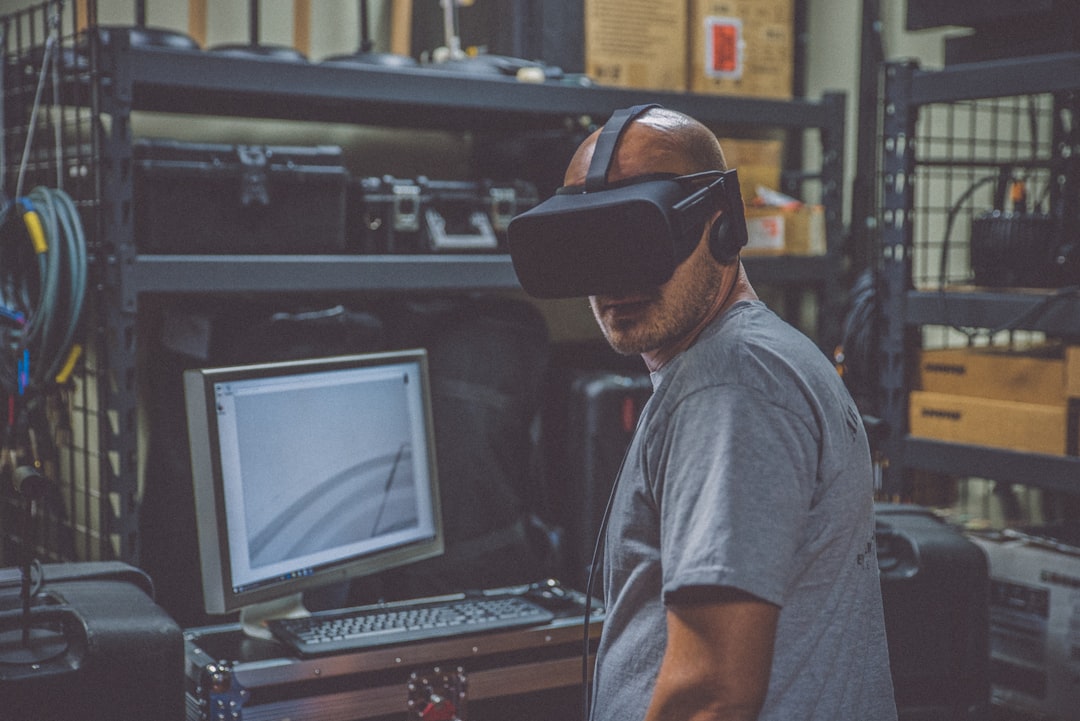
The development of consumer-focused AR wearables is perhaps the most anticipated frontier. Companies are working tirelessly to create devices that are not only powerful but also ergonomic and socially acceptable for frequent use.
Notable AR Wearables:
- Apple Vision Pro – Apple’s earliest foray into spatial computing combines AR and VR in a high-definition, sensor-laden headset.
- Meta Quest 3 – Focused more on the mixed-reality gaming experience, this device builds on Meta’s long-standing investment in AR/VR integration.
- Microsoft HoloLens 2 – Targeted at enterprises, the HoloLens remains a leading device in sectors like defense, healthcare, and manufacturing, enabling collaborative and hands-on work.
The industry is also seeing efforts to minimize device footprint. Companies like Nreal and Vuzix are producing lighter, more user-friendly glasses that are pushing AR closer to everyday use scenarios, from meetings to urban navigation.
The Role of Software in AR
As much as hardware matters, it’s the software that shapes user experience. Contemporary AR software increasingly relies on advanced machine learning and cloud computing, allowing for on-the-fly data analysis and contextual interaction. Some key software developments include:
- AR SDKs: Toolkits like ARKit (Apple) and ARCore (Google) empower developers to build robust AR applications by offering high-level abstractions for spatial recognition, light estimation, and motion tracking.
- Location-Based AR: Leveraging GPS and sensor data, location-specific AR delivers content based on a user’s exact position. Popular games like Pokémon GO utilize this for dynamic in-game environments.
- Web-based AR (WebAR): Reducing the barrier to entry, WebAR allows users to access AR experiences through standard web browsers, eliminating the need for app installations.
These software platforms are critical environments for innovation, as they ensure standardized development and cross-device compatibility, which are essential for scaling AR experiences globally.
Challenges to Mainstream AR Adoption
Despite its promise, augmented reality still faces several hurdles before it becomes an entrenched part of daily life. These include:
- Privacy Concerns: Continuous environment scanning raises ethical issues about surveillance and data ownership.
- Hardware Costs: High development and production costs make advanced AR devices largely unavailable to everyday consumers.
- Social Acceptance: Wearables like AR headsets might appear intrusive or awkward in public, affecting adoption rates.
- Battery Life: Power consumption remains a major hurdle, especially in compact, wearable formats.
Overcoming these challenges requires coordinated efforts among policymakers, tech developers, and manufacturers to ensure that innovation is balanced with usability and ethics.
The Future of Augmented Reality
As AR becomes more tightly integrated with AI and 5G networks, the possibilities will multiply exponentially. We are moving toward a future where AR might replace traditional screens altogether, replacing phones or monitors with environments that are fully augmented.
Upcoming trends likely to define the next phase of AR innovation include:
- Fully Immersive AR Workspaces – Using hand-tracking, voice controls, and spatial computing to create screenless workplaces.
- Contextual Awareness – Apps that can adapt not just to location but to user behavior, intent, and emotional state.
- Cross-Device Continuity – Seamlessly transitioning experiences across AR headsets, mobile phones, and smart glasses.

Ultimately, AR promises to blur the line between the digital and physical worlds, offering unprecedented levels of interaction, information, and immersion. While the road ahead is complex, the momentum behind AR development is undeniable.
Conclusion
As we pass the threshold into a more digitally-augmented world, the role of AR in reshaping our interaction with technology cannot be overstated. From improving how we shop and learn to revolutionizing industries and redefining human interface, AR stands at the cusp of becoming as ubiquitous as the smartphone. Developers, businesses, and consumers alike must prepare for a future where reality isn’t just experienced—but both augmented and enriched.
