


Guitar Pick Business Card: Unique Marketing Ideas for Musicians
For musicians, a business card should do more than share contact details; it should create a moment. A guitar pick business card turns a simple networking tool into something playable, memorable, and closely tied to the artist’s craft. Whether a guitarist is promoting a solo act, a band, a teaching studio, or session work, a pick-shaped card can help transform brief introductions into lasting impressions.
TLDR: A guitar pick business card is a practical and creative way for musicians to stand out. It works because it is useful, brand-relevant, and easy for fans, venues, and industry contacts to remember. The most effective designs combine strong visuals, clear contact information, and a smart distribution strategy. When used well, it becomes both a marketing tool and a mini piece of merchandise.
Contents
- 1 Why a Guitar Pick Business Card Works
- 2 Design Ideas That Make the Pick Unforgettable
- 3 Creative Uses Beyond Handing Them Out
- 4 Pairing the Pick Card With Digital Marketing
- 5 Marketing Ideas for Different Types of Musicians
- 6 How to Make the Card Feel Valuable
- 7 Common Mistakes to Avoid
- 8 Distribution Strategies That Get Results
- 9 Measuring Whether the Idea Works
- 10 Final Thoughts
- 11 FAQ
- 11.1 What is a guitar pick business card?
- 11.2 Who should use guitar pick business cards?
- 11.3 Can a guitar pick business card actually be used to play guitar?
- 11.4 What information should be printed on the pick?
- 11.5 Are QR codes a good idea on guitar pick business cards?
- 11.6 How can musicians distribute guitar pick business cards?
- 11.7 What makes a guitar pick business card memorable?
Why a Guitar Pick Business Card Works
Traditional business cards are often placed in a wallet, dropped into a drawer, or forgotten after an event. A guitar pick business card has a different advantage: it feels like an object with purpose. It is tied directly to music, performance, and creativity, which makes it especially powerful for guitarists, bands, producers, music teachers, and instrument shops.
The appeal comes from both function and emotion. A guitarist may actually use the pick during practice, while a fan may keep it as a souvenir. A venue owner may remember the musician who handed over a card that looked like part of the performance. This physical connection helps the brand stay visible longer than a standard rectangle of paper.
In a crowded music scene, memorability matters. A pick card can communicate style before a single note is played. A matte black pick suggests something different from a neon pop design, while a tortoiseshell look may feel vintage, bluesy, or classic. The format itself becomes part of the message.
Design Ideas That Make the Pick Unforgettable
A guitar pick business card has limited space, so every design choice must earn its place. The best examples are visually strong, easy to read, and aligned with the musician’s identity. Instead of overloading the pick with information, musicians should focus on the essentials.
- Artist or band name: This should be the most prominent element.
- Primary contact method: An email address, social handle, or website is usually enough.
- Logo or symbol: A recognizable mark helps build brand recall.
- QR code: If space allows, it can lead to music, booking information, or a digital press kit.
- Tagline: A short phrase such as “Acoustic soul for private events” can clarify the artist’s niche.
Color also plays a major role. A heavy metal guitarist might choose deep red, silver, or black. A folk artist may prefer cream, forest green, or warm brown. A funk player could lean into bright colors and playful typography. The pick should look like it belongs on stage with the musician.
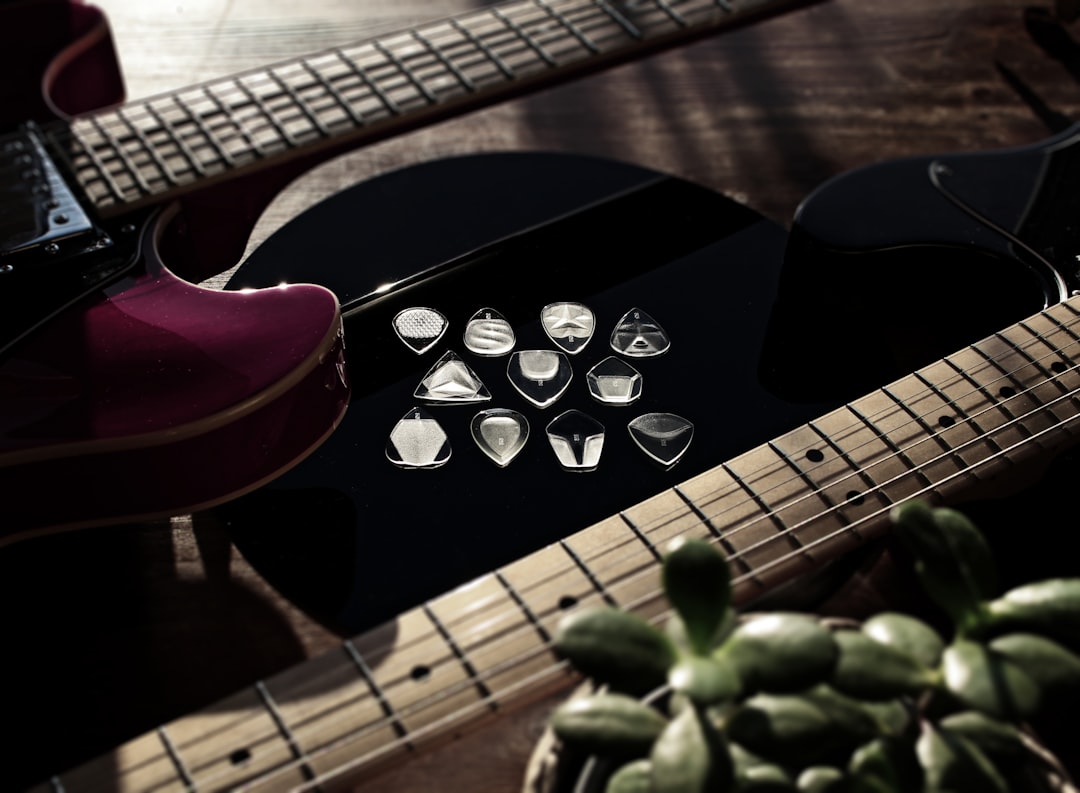
Texture can make the card feel more premium. Glossy finishes feel modern and energetic, while matte finishes feel refined and professional. Transparent or translucent picks can look sleek and collectible. Some musicians may even choose different thicknesses to match real playing preferences, turning the card into a pick that performs as well as it promotes.
Creative Uses Beyond Handing Them Out
A guitar pick business card does not have to be limited to networking conversations. Musicians can use it as part of a broader marketing strategy. Because it is small, durable, and easy to distribute, it can appear in many places where fans and industry contacts naturally gather.
- Merch table giveaways: Picks can be included with albums, shirts, posters, or vinyl purchases.
- Venue leave-behinds: Musicians can give a few to bartenders, sound engineers, and booking managers after a show.
- Fan engagement tools: Signed pick cards can be handed to fans after performances.
- Lesson studio promotions: Guitar teachers can offer them to new students or place them in local music stores.
- Album launch extras: Picks can be packaged with limited-edition releases.
For bands, each member could have a different color or design. The guitarist’s pick might include the band website, while the singer’s version could feature a tour date QR code. Collectible variations encourage fans to keep more than one, especially if each design connects to a song, album, or era of the band’s image.
A musician performing weddings, corporate events, or private parties can also use pick cards to appear professional while still showing personality. Instead of a plain business card, the artist hands over a branded object that instantly communicates, “This person is a musician.”
Pairing the Pick Card With Digital Marketing
The best guitar pick business cards connect offline interactions to online platforms. A person may love the design, but they still need a simple way to hear music, watch videos, or make a booking. This is where a QR code or short URL becomes valuable.
The code can lead to several destinations:
- A streaming profile featuring the artist’s latest tracks.
- A booking page for weddings, events, or club performances.
- A music video that demonstrates stage presence.
- A digital press kit with photos, bio, reviews, and contact information.
- A mailing list signup offering exclusive songs or show updates.
However, the design should not rely only on the QR code. Some people may not scan it right away, so the pick still needs enough information to remain useful. A short website address and one social media handle can work well. If the artist uses the same handle across multiple platforms, the card becomes cleaner and easier to remember.

Marketing Ideas for Different Types of Musicians
Different musicians can use guitar pick business cards in different ways. The format is flexible enough to suit many professional goals.
Solo Guitarists
A solo guitarist can use the pick as a signature item. For a fingerstyle, jazz, classical, or acoustic performer, the design can emphasize elegance and professionalism. A simple logo, a soft color palette, and a clear booking link can make the pick suitable for cafés, restaurants, weddings, and cultural events.
Rock and Metal Bands
For heavier genres, the pick can become a piece of band identity. Dark colors, bold symbols, distressed textures, and dramatic typography can make the object feel like merch. Bands can throw a few into the crowd, place them at the merch table, or include them with limited-run posters.
Music Teachers
For guitar instructors, a pick business card is especially effective because students can use it immediately. The card can include the teacher’s name, lesson type, location, and contact details. A phrase like “Your first lesson starts with one pick” adds warmth and purpose.
Session Musicians
Session players need to communicate reliability and versatility. Their pick card should feel polished, not cluttered. It might include the musician’s name, instruments played, website, and a QR code to a reel. Producers and studio owners may appreciate a card that is compact, relevant, and easy to keep near a mixing desk.
Music Stores and Repair Shops
A guitar pick business card is not only for performers. Instrument shops, luthiers, amp repair services, and pedal builders can use pick-shaped cards to reach players directly. A repair shop might print its phone number on one side and a setup discount code on the other.
How to Make the Card Feel Valuable
The more valuable the pick feels, the more likely people are to keep it. Musicians should think of it as a small collectible, not just a card. Limited editions can make a big difference. A band might create a new pick design for each tour. A songwriter might release one design per album. A teacher might give students a “level up” pick after they complete a milestone.
Personalization also increases value. A musician can sign picks with a metallic marker after shows. A band can print a small lyric, symbol, or inside reference that fans recognize. Even a simple phrase such as “Thanks for listening” can make the object feel more personal.
Another approach is to add a promotion. The pick could include a discount for guitar lessons, a secret link to an unreleased demo, or early access to ticket sales. When the card gives the recipient a reason to act, it becomes more than a keepsake.
Common Mistakes to Avoid
Although guitar pick business cards are creative, they can fail if poorly planned. The biggest mistake is trying to include too much information. A pick is small, and crowded text becomes hard to read. Musicians should prioritize clarity over decoration.
Another issue is choosing style over usability. If the pick is too thin, slippery, or awkward, guitarists may not want to use it. If it is too dark and the text has low contrast, people may not be able to read it in a dim venue. The design should be tested under real conditions: backstage, at a bar, at a merch table, and in a guitar case.
Musicians should also avoid outdated contact details. Since pick cards are often produced in batches, the information should be stable. A website or permanent email address is safer than a temporary campaign link. If a QR code is used, the destination should be maintained and checked regularly.
Distribution Strategies That Get Results
A great guitar pick business card only works if it reaches the right people. Musicians should be intentional about distribution. Instead of giving picks to everyone randomly, they can use them at moments when interest is already high.
- After a performance: People are most emotionally connected right after a strong set.
- During networking events: Industry contacts are already expecting promotional materials.
- At local music shops: Players are naturally likely to appreciate a pick.
- In shipped merch packages: The pick adds surprise and encourages repeat purchases.
- At open mics and jam nights: Other musicians may become collaborators, referrers, or fans.
The musician can also create a call to action around the pick. For example, fans could be encouraged to post a photo of the pick and tag the artist. A band may run a monthly giveaway for anyone who shares a pick photo from a show. This turns a small physical item into social media content.
Measuring Whether the Idea Works
Like any marketing tool, a guitar pick business card should be evaluated. Musicians can track results by using a unique QR code, a custom landing page, or a special promo code printed on the pick. If many people scan the code after a concert, the musician knows the strategy is working.
Feedback is useful too. If fans comment on the pick, keep it, or ask for extras, that is a positive sign. If people seem confused by the design or cannot read the text, the concept may need refinement. The goal is not only to impress people, but to guide them toward the musician’s next step: listening, following, booking, buying, or sharing.
Final Thoughts
A guitar pick business card succeeds because it is both practical and symbolic. It reflects the musician’s world, fits naturally into performance culture, and gives recipients something they may genuinely want to keep. In an industry where first impressions often happen quickly, that kind of relevance is powerful.
For musicians who want marketing that feels authentic, a pick-shaped card offers a smart blend of branding, utility, and personality. When designed with care and used strategically, it can become a pocket-sized ambassador for the artist’s sound, style, and story.
FAQ
What is a guitar pick business card?
A guitar pick business card is a promotional card shaped like a guitar pick. It usually includes an artist name, logo, contact information, website, social handle, or QR code.
Who should use guitar pick business cards?
They are ideal for guitarists, bands, music teachers, session musicians, music stores, repair shops, and anyone whose brand connects to guitar culture.
Can a guitar pick business card actually be used to play guitar?
Yes, if it is made from suitable material and thickness. Many musicians prefer cards that function as real picks because they are more likely to be kept and used.
What information should be printed on the pick?
The most important details are the artist or business name, one contact method, a website or social handle, and possibly a QR code. The design should remain simple and readable.
Are QR codes a good idea on guitar pick business cards?
Yes, QR codes can be very effective if they lead to music, booking pages, videos, or a press kit. The code should be tested carefully to ensure it scans despite the pick’s small size.
How can musicians distribute guitar pick business cards?
They can hand them out after shows, place them at merch tables, include them in album orders, give them to venue managers, or leave them at local music shops.
What makes a guitar pick business card memorable?
A memorable pick card has a strong visual identity, clear text, useful contact details, and a design that matches the musician’s genre and personality.
