

Crypto Trading Bots That Run Automated Strategies 24/7
Cryptocurrency markets never sleep. Prices move every second, across time zones and continents, creating constant opportunities—and constant risks. For many traders, keeping up with this pace manually is nearly impossible. That is where automated crypto trading bots come in, offering round-the-clock execution driven by predefined strategies and data-driven logic.
TLDR: Crypto trading bots are automated software programs that execute trading strategies 24/7 based on predefined rules and market data. They remove emotional decision-making, react faster than humans, and can monitor multiple markets simultaneously. While powerful, they require careful configuration, risk management, and continuous oversight. Used correctly, they can significantly improve efficiency and discipline in crypto trading.
Automated trading is not a new concept in financial markets. Traditional stock and forex markets have relied on algorithmic strategies for decades. In the cryptocurrency space, however, automation has become even more relevant due to extreme volatility, fragmented exchanges, and nonstop global activity. A well-configured crypto trading bot can monitor market conditions in real time, analyze indicators, and execute trades within milliseconds—something no human can consistently achieve without assistance.
Contents
- 1 What Are Crypto Trading Bots?
- 2 Why 24/7 Automation Matters in Crypto
- 3 Common Types of Automated Strategies
- 4 The Advantages of Using Trading Bots
- 5 The Risks and Limitations
- 6 Risk Management in Automated Trading
- 7 Choosing or Building the Right Bot
- 8 Institutional Adoption and Market Maturity
- 9 Best Practices for Responsible Use
- 10 The Future of 24/7 Automated Trading
What Are Crypto Trading Bots?
A crypto trading bot is a software program that connects to cryptocurrency exchanges via APIs and executes trades according to predefined rules. These rules are typically based on:
- Technical indicators (e.g., moving averages, RSI, MACD)
- Price action patterns
- Arbitrage opportunities between exchanges
- Portfolio rebalancing logic
- Trend-following or mean-reversion strategies
The key feature of these bots is automation. Once deployed, they operate 24/7 without fatigue, distraction, or emotional bias. This continuous operation is particularly valuable in crypto markets, where weekend activity can be just as volatile as weekday trading.
Why 24/7 Automation Matters in Crypto
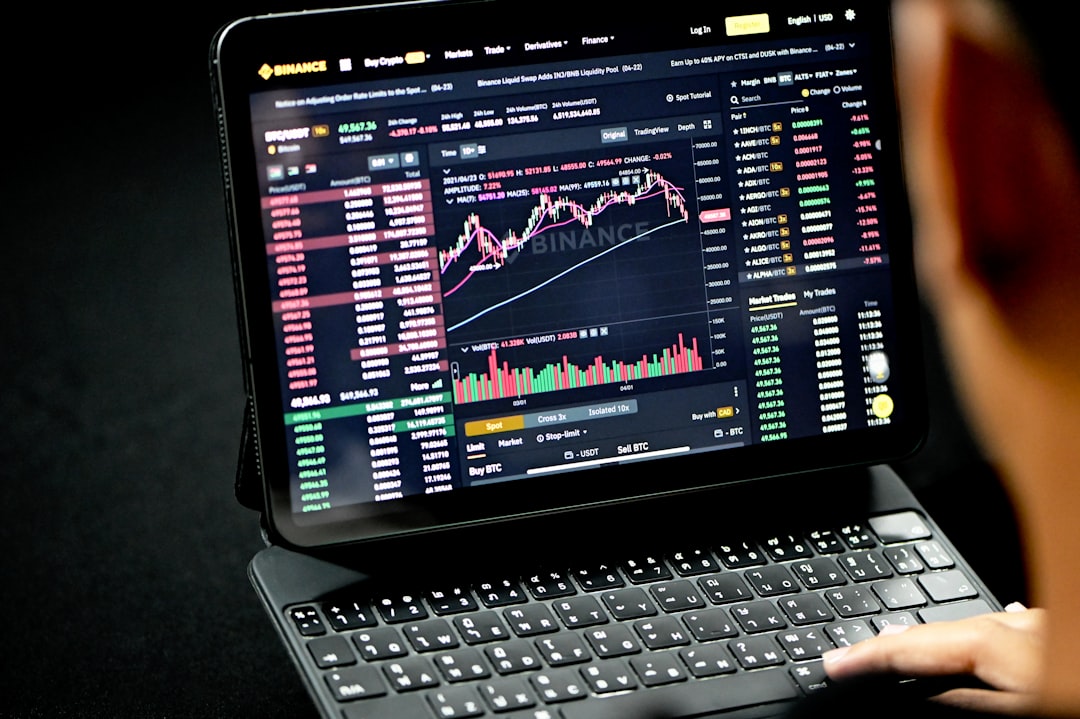
Unlike traditional financial markets, cryptocurrency exchanges operate every hour of every day. There are no market openings or closings, no official holidays, and no centralized trading pauses. Opportunities can emerge at 3 a.m. just as easily as at 3 p.m.
Without automation, traders face several challenges:
- Missed opportunities during sleep or work hours
- Delayed reaction times during sudden price movements
- Emotional decision-making during volatility spikes
- Inconsistent strategy execution
Trading bots solve these problems by ensuring that a predefined strategy is applied consistently, regardless of time or external distractions. This consistency is often the difference between disciplined trading and impulsive behavior.
Common Types of Automated Strategies
Trading bots can run a variety of strategies, each suited to different market conditions. Understanding these core approaches is essential before deploying automation.
1. Trend-Following Strategies
Trend-following bots attempt to capitalize on sustained upward or downward movements. They often rely on moving averages or breakout indicators. When price crosses a defined threshold, the bot automatically enters or exits positions.
This approach works best during strong directional markets but may struggle during sideways conditions.
2. Mean Reversion
Mean-reversion strategies assume that price will eventually return to its historical average. When assets appear “overbought” or “oversold” based on indicators like RSI or Bollinger Bands, the bot executes trades anticipating a reversal.
This strategy can be effective in range-bound markets but carries higher risk during powerful breakouts.
3. Arbitrage
Crypto price discrepancies between exchanges can create arbitrage opportunities. Bots can instantly detect price differences and execute simultaneous buy and sell orders to capture small spreads.
This requires:
- Fast execution speeds
- Low trading fees
- Efficient fund allocation across exchanges
4. Grid Trading
Grid trading bots place buy and sell orders at predefined intervals within a price range. As the price fluctuates, the bot systematically profits from small oscillations.
This strategy is particularly popular in volatile but sideways markets.
The Advantages of Using Trading Bots
Automated crypto trading offers several compelling benefits:
Emotional Discipline
Fear and greed are two forces that undermine retail traders. Bots remove emotional bias by strictly following programmed logic.
Speed and Precision
Market conditions can shift within seconds. Bots react instantly to signals and execute without hesitation.
Multi-Market Monitoring
A single trader can only monitor a limited number of markets. Bots can simultaneously track dozens or even hundreds of trading pairs.
Backtesting Capabilities
Most advanced systems allow historical backtesting. Traders can evaluate how their strategy would have performed under past conditions before risking capital.
Scalability
Once proven effective, an automated strategy can be scaled across larger capital allocations or multiple exchanges.
The Risks and Limitations
Despite their advantages, crypto trading bots are not risk-free. They are tools—powerful ones—but only as effective as their configuration.
- Over-optimization: A strategy that performs perfectly in backtesting may fail in live markets due to curve fitting.
- Market regime shifts: Strategies effective in bullish trends may collapse in bearish conditions.
- Technical failures: API errors, server outages, or connectivity issues can disrupt execution.
- Security risks: Exchange API keys must be protected to prevent unauthorized access.
Continuous monitoring remains essential. Automation does not eliminate responsibility—it enhances execution precision within defined parameters.
Risk Management in Automated Trading
Professional traders understand that risk management is more important than entry timing. Automated systems must incorporate strict capital protection controls.
Key safeguards include:
- Stop-loss mechanisms to limit downside exposure
- Position sizing rules to avoid overleveraging
- Maximum drawdown thresholds that pause trading
- Diversification across assets
A well-designed bot prioritizes capital preservation over aggressive profit chasing. Sustainable performance over months and years matters more than isolated high-return periods.
Choosing or Building the Right Bot
There are generally two paths for traders:
Using Prebuilt Bots
Commercial platforms offer ready-made solutions with user-friendly interfaces. These are suitable for traders who prefer configuration over programming.
Advantages:
- Quick setup
- Integrated backtesting tools
- Technical support
Drawbacks:
- Limited customization
- Subscription fees
- Shared strategies that may reduce competitive edge
Developing Custom Bots
More advanced traders and institutions often build proprietary systems. This approach allows full control over algorithms, optimization logic, and infrastructure.
However, it requires:
- Programming expertise
- Statistical understanding
- Robust testing frameworks
- Ongoing maintenance
Institutional Adoption and Market Maturity
Algorithmic trading in crypto is no longer limited to retail participants. Hedge funds, market makers, and proprietary trading firms rely heavily on automated systems. Their presence has increased liquidity and tightened spreads, contributing to a more mature market structure.
This institutional involvement reinforces an important reality: automation is not a shortcut to guaranteed profits. It is a competitive standard. To remain effective, strategies must evolve alongside market dynamics.
Best Practices for Responsible Use
For those considering crypto trading bots, a disciplined approach is critical:
- Start small: Deploy limited capital during testing phases.
- Backtest realistically: Include slippage and trading fees in simulations.
- Use secure API permissions: Disable withdrawal access where possible.
- Monitor performance metrics: Track win rate, drawdown, and risk-adjusted returns.
- Adapt regularly: Markets evolve; static strategies deteriorate.
Automation should complement judgment—not replace it entirely. Human oversight ensures strategic adjustments when macroeconomic conditions or regulatory changes alter the market landscape.
The Future of 24/7 Automated Trading
As artificial intelligence and machine learning continue advancing, crypto trading bots are becoming more sophisticated. Emerging systems can analyze sentiment data, on-chain metrics, and cross-market correlations in addition to traditional price indicators.
However, complexity does not eliminate uncertainty. Even the most advanced machine learning models operate on probabilities, not guarantees. Sustainable success will always depend on disciplined execution, robust risk management, and continuous evaluation.
Conclusion: Crypto trading bots that run automated strategies 24/7 represent a significant evolution in digital asset trading. They provide consistency, speed, and analytical power that far exceed manual capabilities. Yet they are not magic solutions. When used with caution, tested rigorously, and monitored responsibly, they can become valuable tools in a serious trader’s long-term strategy. In a market that never sleeps, disciplined automation offers a structured way to remain engaged—without sacrificing control or prudence.
