


WebAssembly Runtimes That Help You Execute Code Across Environments
Software teams are under constant pressure to build applications that run consistently across browsers, servers, edge devices, and cloud platforms. WebAssembly (Wasm) has emerged as a powerful answer to this challenge, offering a portable, secure, and high-performance binary instruction format. At the center of this evolution are WebAssembly runtimes—specialized engines that execute Wasm modules reliably across diverse environments.
TLDR: WebAssembly runtimes enable developers to execute compiled code consistently across browsers, servers, edge platforms, and embedded systems. They provide portability, sandboxed security, and near-native performance without being tied to a single operating system or architecture. Modern runtimes extend beyond the browser, supporting microservices, plugins, serverless computing, and IoT use cases. As cloud-native infrastructure evolves, WebAssembly runtimes are becoming a critical layer for cross-environment application deployment.
Understanding how these runtimes work—and why they matter—requires a closer look at the WebAssembly model and the ecosystem that supports it.
Contents
- 1 Understanding WebAssembly and Its Execution Model
- 2 Why WebAssembly Runtimes Matter Beyond the Browser
- 3 Key Characteristics of Effective WebAssembly Runtimes
- 4 Leading WebAssembly Runtimes in the Ecosystem
- 5 WebAssembly in Cloud-Native and Microservices Architectures
- 6 Edge Computing and IoT Applications
- 7 The Role of WASI in Cross-Environment Execution
- 8 Security Considerations and Operational Governance
- 9 Challenges and Limitations
- 10 The Strategic Outlook for WebAssembly Runtimes
Understanding WebAssembly and Its Execution Model
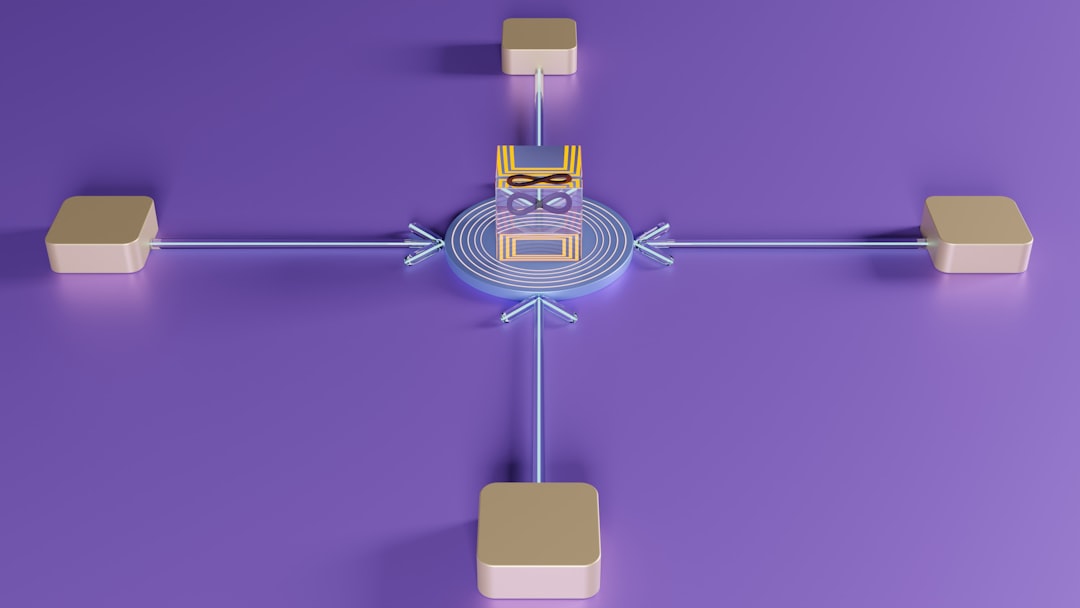
WebAssembly is a low-level bytecode format designed for efficient execution and compact representation. Unlike JavaScript, which is interpreted or just-in-time compiled, Wasm code is typically compiled ahead of time from languages such as C, C++, Rust, Go, or AssemblyScript. The result is a portable binary module that can run within any environment equipped with a compatible runtime.
A WebAssembly runtime is responsible for:
- Loading Wasm binary modules
- Validating their structure and security constraints
- Compiling or interpreting instructions
- Executing the code inside a sandboxed environment
- Managing memory and host interactions
This architecture allows Wasm modules to operate in isolation from the host system while still interacting with it through well-defined interfaces.
Why WebAssembly Runtimes Matter Beyond the Browser
WebAssembly was initially developed to improve browser performance for web applications. Today, its use cases extend far beyond frontend web development. Modern runtimes allow Wasm modules to run in:
- Cloud servers
- Serverless computing environments
- Edge networks
- Containers and Kubernetes clusters
- IoT and embedded devices
This expansion is significant because traditional deployment methods often require recompilation or environment-specific configuration. WebAssembly runtimes minimize these friction points by ensuring that the same compiled module can execute consistently wherever a compatible runtime exists.
Key Characteristics of Effective WebAssembly Runtimes
While multiple runtimes are available, the most effective ones share several core characteristics:
1. Portability
A runtime must operate across different operating systems and hardware architectures. This ensures that Wasm modules compiled once can be executed anywhere without modification.
2. Security Isolation
WebAssembly emphasizes sandboxing. Runtimes restrict direct access to system resources, limiting operations to those explicitly allowed through host APIs. This design reduces the attack surface significantly compared to traditional native binaries.
3. Performance Optimization
Advanced runtimes implement just-in-time (JIT) or ahead-of-time (AOT) compilation strategies to approach near-native performance. Efficient memory management and startup time are especially critical in serverless and edge contexts.
4. Minimal Footprint
For edge devices and embedded systems, runtime size matters. Lightweight runtimes enable execution in constrained hardware environments with limited memory.
5. Extensibility
Modern runtimes support extensions such as the WebAssembly System Interface (WASI), allowing modules to interact with file systems, networking, and other operating system abstractions in a standardized manner.
Leading WebAssembly Runtimes in the Ecosystem
The WebAssembly ecosystem includes a range of runtimes tailored to different purposes. Some focus on browser execution, while others are optimized for cloud-native workloads.
Wasmtime
Designed with security and performance in mind, Wasmtime is widely used in server applications and cloud environments. It implements WASI and integrates well with containerized architectures.
Wasmer
Wasmer emphasizes portability and ease of integration. It allows developers to embed a WebAssembly runtime directly into applications and supports multiple compilation backends.
WasmEdge
Optimized for cloud-native and edge deployments, WasmEdge provides fast startup times and efficient execution for microservices and serverless functions.
Node.js WebAssembly Support
Node.js includes native WebAssembly capabilities, allowing developers to integrate Wasm modules into existing JavaScript server-side applications.
Each runtime serves different priorities, but all share a commitment to portability and secure execution.
Image not found in postmetaWebAssembly in Cloud-Native and Microservices Architectures
In cloud-native systems, containers have long been the standard deployment unit. However, containers carry operating system overhead, which can impact startup time and resource efficiency.
WebAssembly runtimes offer a compelling alternative:
- Faster cold starts compared to traditional containers
- Lower memory consumption
- Stronger isolation boundaries
- Environment-agnostic binaries
These benefits make Wasm particularly attractive for microservices and short-lived functions in serverless computing. Instead of deploying full container images, organizations can deploy lightweight Wasm modules that run instantly within a host runtime.
This shift reduces operational overhead and enables more granular scaling strategies.
Edge Computing and IoT Applications
Edge computing demands execution environments that are secure, efficient, and lightweight. Devices operating at the edge often have limited processing power and memory resources. WebAssembly runtimes meet these constraints effectively.
The benefits include:
- Small binary sizes
- Deterministic behavior
- Cross-architecture compatibility
- Secure sandboxing for untrusted workloads
For IoT deployments, Wasm modules can be pushed to devices running compatible runtimes without recompilation for each architecture. This significantly streamlines maintenance and updates across distributed device networks.
The Role of WASI in Cross-Environment Execution
The WebAssembly System Interface (WASI) is a standardized system interface that allows Wasm modules to interact with host resources in a controlled way. Without WASI, WebAssembly would remain largely isolated from system-level operations.
WASI provides:
- File system access
- Networking capabilities
- Environment variable handling
- Clock and random number APIs
Because WASI is standardized, runtimes implementing it can ensure consistent behavior across platforms. This consistency is fundamental for organizations seeking true cross-environment execution capabilities.

Security Considerations and Operational Governance
Security remains one of WebAssembly’s strongest attributes. Wasm modules operate inside strict sandboxes with limited permissions by default. Unlike traditional executables, they cannot directly access memory or system calls outside their defined interfaces.
For enterprise deployments, this containment supports:
- Safer multi-tenant execution
- Plugin systems without full trust
- Reduced risk of privilege escalation
- Simplified compliance auditing
Runtimes often include additional controls such as resource metering, execution time limits, and memory quotas. These controls are particularly valuable for public cloud services that execute untrusted or third-party code.
Challenges and Limitations
Despite its strengths, WebAssembly is not without challenges. The ecosystem, while maturing quickly, still faces limitations:
- Standardization gaps for certain system-level integrations
- Debugging complexity compared to traditional runtime environments
- Tooling maturity varies across languages
- Limited direct hardware access by design
Organizations adopting WebAssembly runtimes must carefully assess integration requirements and ensure that their target environments support necessary APIs and extensions.
The Strategic Outlook for WebAssembly Runtimes
WebAssembly is increasingly seen as a foundational technology for the future of distributed computing. Its ability to provide a universal execution layer across environments aligns closely with modern architectural trends:
- Multi-cloud deployments
- Hybrid infrastructure models
- Edge-native services
- Zero-trust security frameworks
As tools and standards mature, WebAssembly runtimes are expected to complement—and in some scenarios partially replace—containers for specific workloads. Their speed, security, and portability offer compelling operational advantages.
For organizations seeking consistency across browser, server, and edge deployments, WebAssembly runtimes provide a serious, technically sound solution. They reduce environmental discrepancies, enhance isolation, and allow code written in multiple languages to execute reliably across platforms.
In a landscape where interoperability and efficiency are paramount, WebAssembly runtimes are not simply an experimental technology. They represent a strategic infrastructure layer that enables dependable, cross-environment code execution at scale.
